

I love Olivia Wilde so much, because I like anyone who is inappropriately intense in public. Everything I know about her personal life (and thanks to a misogynistic and unavoidable hate campaign a few years back, I know so much) only deepens my affection. I feel a distant but steadfast solidarity with her.
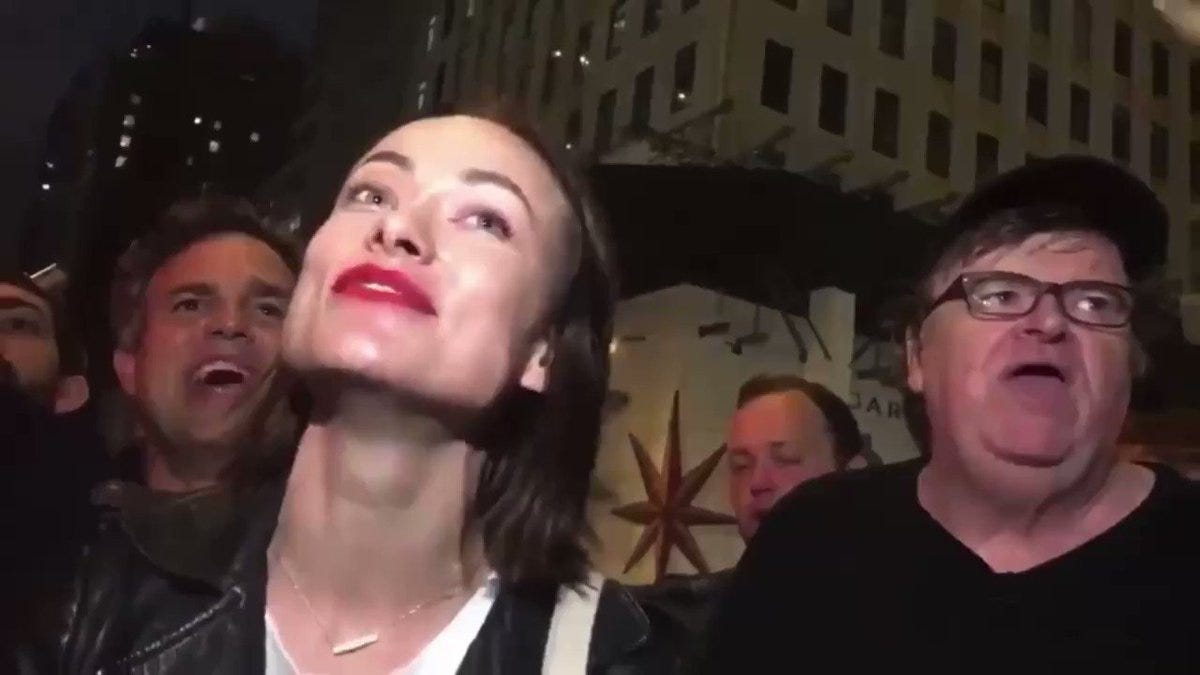
She is also the best part of anything she’s in. Still, I cannot think of a movie where Olivia Wilde is not punished, abandoned, or sidelined in some way. I think of her in that cab in Babylon, or as the blind date in Her. She is a brilliant performer relegated to do great work in projects that routinely undervalue her. Even when she has directed herself, such as with 2022’s Don’t Worry Darling, she plays a character complicit in her own metaphysical suffering.
I Want Your Sex, out tomorrow, is not about Olivia Wilde. It is about Gregg Araki. His first feature in 12 years ought to be two be cause for celebration, an opportunity for him to make his mark on yet another generation of gays. The film stars Cooper Hoffman as Elliot, an assistant-cum-submissive for a Gen-X artist named Erika. Araki has said in interviews that IWYS is inspired by how depressed he got upon hearing that young people were having less sex than in the past. I don’t have the desire to dissect the whole “gen-z puritans” thing, but I have yet to see a meaningful study that demonstrates a decline in sex amongst out gay people or their associates; speaking from anecdotal experience, heteroflexible art students that look like Cooper Hoffman do not have problems getting laid.
This actually turned out not to be a real problem. Araki is drawn to this idea because it holds erotic potential, which is a great reason to pursue anything. The tale of a boy being pulled, against his own comfort and better judgement, into fulfilling his own sexual desires is the perfect antidote to gooned-out, austere “subversions” of intimacy or fetish content. The procession of reverse-engineered romance novel narrative devices is charming. The sexually liberated older millennial, it turns out, is just as prone to interpersonal deflection and emotionally stunted behavior. Neat premise for a rom-com!
Unfortunately, IWYS is also a failure. Araki’s worst habits from the past two decades have never been more pronounced. The edit and sound effects and lewd cartoon overlays are as obnoxious as they were in Kaboom! The commentary on the art world is grumpy and inane. The migraine-inducing set design is filmed in flat, awkward compositions with heavy post-processing filters used to dubious effect. The movie is only ever incidentally hot, and all the sex jokes feel like reference humor.
Everything about the way this movie approaches the world and its characters feels alien, informed by random thinkpieces and theatrical archetypes. In movies like Nowhere or Mysterious Skin, that signature style produced something exciting, something emotionally sincere, something funny in a way that spoke to how it feels to be young, hot, cruel, pathetic, and lost. I Want Your Sex is comprised entirely of Things You Associate With Gregg Araki Movies, but it harbors none of the interiority, perspective, or fashion that made me fall in love with his work in the first place. It feels like a grating redundancy in his oeuvre.
…except for Erika. Olivia Wilde gives the best performance of the year in a movie that is totally unprepared to handle her. In a film that wishes, desperately, to make her a harpy, a nagging maternal figure, a joke fantasy, Wilde refuses to let herself be discarded. Araki is far more interested in Hoffman’s bumbling, clingy straight guy, so much so that the camera often seems eager to literally cut Wilde out of the scene as much as possible. Yet she demands her own prominence by virtue of just being that fucking good. Multiple times, she does something clearly meant to humiliate her, to make her body or her affect a punchline. Yet she ruins those moments by imbuing them with something authentically sexy and profoundly tragic. Wilde plays Erika like a Charlotte Bronte heroine just off a four-year stint in SLAA - manipulative, witty, reckless yet emotionally reserved. The film is embarrassed of her, and so in turn, she makes like an embarrassment out of any part of the film that deigns not to orbit her. Here is a woman who wants to give her lover a sense of purpose through sex that she could never find herself. When this does not fulfill her vicariously, she becomes allergic to her own emotions. In a movie that purports to be about Young People Right Now, Erika is the only one whose relationship to sex is rendered in familiar terms to me, a young woman who fucks with some regularity.
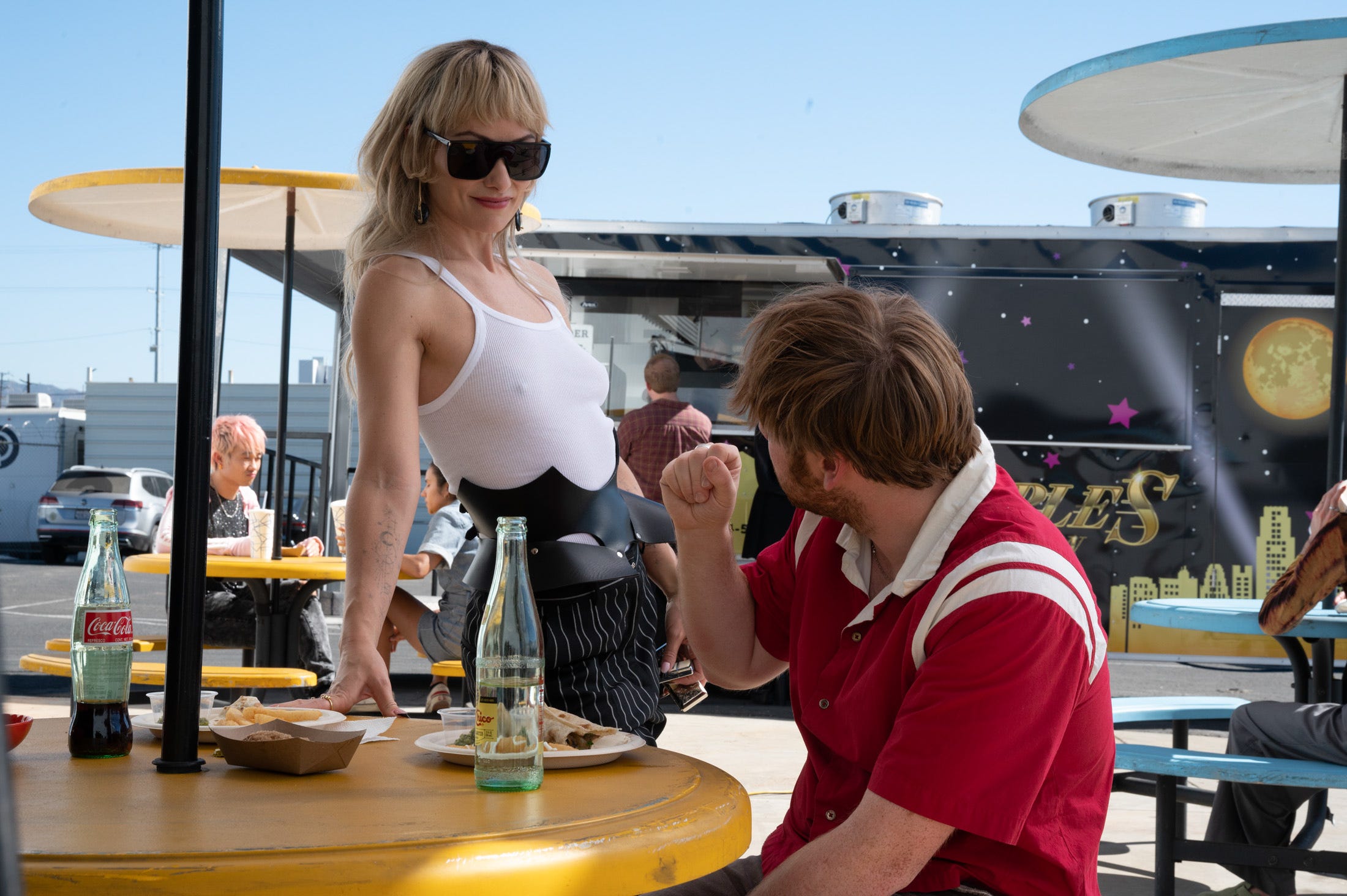
I am indifferent to the movie that Gregg Araki made. I am extremely invested in whatever movie that Olivia Wilde was acting in. This contradiction was so compelling it made me see The Invite, a movie I probably should have watched a month ago if I had wanted to write about it on my Substack.
I did not want to see The Invite because I found Olivia Wilde’s previous two films painful. Don’t Worry Darling and Booksmart are both bad movies, sure, but I’m not referring to their quality. In fact, her work always maintains a coherent vision beyond what’s on the page, and all her actors and technical departments are totally in sync; she has always been an obviously capable director. But these are films that surface fear and regret so brazenly that it triggers intense, uncomfortable sympathy in my brain.
Take Booksmart. That is a movie derailed by a single decision: all the kids are rich as fuck. The script can never square the small ways this makes characters behave in uncanny and ugly ways. But what has stuck with me is the morose urgency that fuels the central characters. Superbad is a movie about two people who are one another’s favorite person. The last-minute teenage hi jinx are irrelevant; they have already experienced the life-changing part before the movie starts. In contrast, Booksmart is about two friends bonded by their mutual resentment for the ways that they mirror one another’s shortcomings and stunted potential. It is a depressing movie about two kids who realize that they have kept themselves from being children are now in a competitive mad-dash to compensate for a lifetime of austerity in one night.
Don’t Worry Darling is similarly upsetting. Despite its feminist trappings, this film is so insistent on torturing Florence Pugh again and again. The camera is fixated on this woman’s undeserved suffering, to a degree that surpasses all narrative motivation or artistic purpose. The irrational nature of the film’s chosen mode could only be a personal exorcism for Wilde, because there is no use possible reason anyone would a high-concept fable like this feel this bad.
Perhaps I am spending so much time on Olivia Wilde’s other work because I have little to say about The Invite as a holistic project. In contrast to I Want Your Sex, here is a movie that disparages millennial inhibition, and is basically successful. It is not-infrequently funny, and Edward Norton gives the kind of performance that makes me want to become bisexual again. Ultimately, as much as I have nostalgia for the adult middle-brow comedies that dominated the American cinema of my childhood, this is not an exemplar of the genre.
The Invite is an effortful motion picture. Olivia Wilde is trying so hard, gripped by the fear that at any moment her chamber drama might become boring. So she has micro-managed every gesutre, planned every composition such that it can only be cut in one certain way at a deceptively break-neck rhythm. The Invite is as high-strung as the neurotic housewife at the center.
It is this eager energy that made the film go from pleasant, to exhausting, all the way back to endearing. The Invite has lots of Informed Blocking and Embodied Glances. The staging is feasible, but it constantly teeters on useless showmanship. It very rarely crosses that line (though a literally lampshaded monologue from Seth Rogan near the end did make me groan), but that proximity to a certain Muchness proves wearisome.
You can see this in Olivia Wilde’s performance too. Her face constricts, expands, twists, and crumples in ways I couldn’t mimic after practicing in the mirror for a lifetime (and I’m autistic as fuck, so trust that I’ve tried). Wilde’s need to be entertaining, to be a spectacle on her own, suggests she has put herself under a lot of pressure as the star of her directorial comeback. That stress is palpable and becomes the core of the film.
Because Olivia Wilde insists on embarrassing herself, even when she has no cause to be embarrassed. She cannot help but make her sexuality a joke, even when she is earnestly portraying a deep vulnerability on-screen. The fact that none of the sex stuff in The Invite is all that crazy only heightens the film’s desperation. The couple in The Invite is in dogged denial of their own reality. Olivia Wilde’s character is disenchanted with monogamy, is trapped by her own refusal to admit defeat, is adamant that her own sexual urges are unimportant. It is really depressing to witness an artist bring these things to the fore and then brush them off at the same time.
For the third time in a row, Olivia Wilde has taken fun material and saddled it with the impossible disappointments of a lifetime. For the umpteenth time, she has taken a role of a fool and bent light to her will. I can’t wait for the next time she leaves frustrated, saddened, wonderstruck.
love ya lots (x2 because I forgot last time),
helmet girl xx
My god everything about this is only reinforced times ten by Drinking Buddies
Wildly different films but this sounds a lot like her appearance in Richard Jewell - an awfully-written character who somehow still dominates the screen every time she's featured and has people in Letterboxd reviews wishing she was their best friend